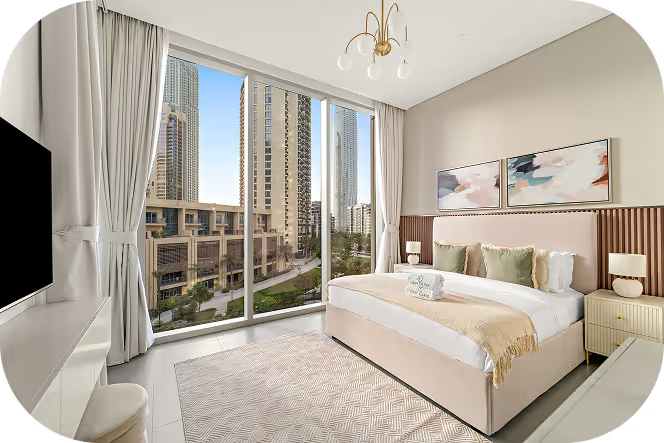

The Regulatory Authority: DTCM
The Department of Tourism and Commerce Marketing (DTCM) oversees all holiday home operations in Dubai. Their jurisdiction covers licensing and permit issuance, operational standards and inspections, guest registration requirements, tourism fee collection and remittance, and enforcement and penalties.
There are no exemptions for small operators, occasional rentals, or owner-managed properties. The rules apply equally to everyone.
Licensing: The Foundation
Operating a holiday home without a valid DTCM licence is illegal. Full stop.
Anyone renting property short-term in Dubai needs a licence, whether properties are listed on Airbnb, Booking.com, or any platform, or marketed privately. This applies to individual owners and professional operators alike.
The process involves application through the DTCM portal, documentation submission including title deed, ID, and property details, property inspection in some cases, and permit issuance upon approval. With correct documentation, most licences are approved within approximately two weeks. Licences require annual renewal, and lapses create immediate compliance exposure.


Property Eligibility
Not every property automatically qualifies for holiday home licensing.
Eligibility depends on building approval status for short-term rentals, community and master developer rules, safety and access requirements, and property classification and condition. Both apartments and villas can be licensed, but requirements may differ. Some buildings prohibit short-term rentals entirely, while others have specific approval processes.
Verifying eligibility before investing in furnishing or marketing prevents wasted resources.
Guest Registration: The Most Enforced Requirement
Guest registration is where enforcement is most active. Owners must register every guest with DTCM, collect and verify valid identification, submit registration within required timeframes, and maintain accurate records.
Failed registrations are among the most common triggers for penalties. Authorities cross-reference platform bookings against registration records. Automated registration systems eliminate manual errors and ensure every stay is properly documented.


Tourism Dirham Fees
Holiday home operators must collect and remit Tourism Dirham fees. These are charged per room, per night, with amounts varying by property classification. Fees must be collected from guests and remitted to authorities on schedule.
Late payments trigger penalties. Incorrect calculations create audit exposure. Non-remittance can result in licence suspension. This is an area where small errors compound into significant problems, making systematic handling essential.
Fines and Penalties
Dubai actively enforces holiday home regulations. Common triggers for penalties include operating without valid licence, failed or late guest registrations, tourism fee errors or non-payment, breaching building or community rules, and safety standard violations.
Consequences range from financial penalties varying by violation severity, to licence suspension, platform delisting, and in serious cases, forced operational closure. A zero-fines compliance record is only achievable with consistent systems and oversight.

Building and Community Rules
Beyond DTCM requirements, individual buildings and communities may impose additional rules covering short-term rental restrictions or prohibitions, guest access and security procedures, noise and behaviour policies, and parking and common area usage.
Violating building rules can result in fines from building management, complaints triggering DTCM attention, operational restrictions, or forced exit from short-term rental activity. Understanding tower-level policies before committing to a property prevents costly surprises.
2026 Expectations
While specific 2026 regulatory updates are still being finalised, enforcement trends indicate increased scrutiny of guest registration accuracy, tighter auditing of Tourism Dirham compliance, greater coordination between platforms and regulators, and reduced tolerance for operational errors.
Owners relying on informal approaches or hoping issues won't be noticed face increasing risk. The regulatory environment is maturing, not loosening.

Common Compliance Mistakes
Many owners fall into non-compliance unintentionally. Frequent issues include assuming Airbnb handles compliance automatically (it doesn't), missing guest registrations during busy periods, delaying Tourism Dirham submissions, operating during licence renewal gaps, misunderstanding villa eligibility requirements, and ignoring building-specific restrictions.
Each mistake creates exposure. Compounded over time, they create serious operational risk.
How Professional Management Eliminates Risk
Compliance isn't a one-time task — it's ongoing operational discipline. Professional management protects owners through automated guest registration workflows, systematic tourism fee handling, licence renewal tracking, building rule monitoring, audit-ready documentation, and regulatory update monitoring.
Properties under professional compliance management maintain clean records — zero fines, zero suspensions, zero disruptions


The Commercial Case for Compliance
Compliance isn't just about avoiding penalties. It's about protecting income. Licenced properties list on all platforms without restriction. Clean records prevent sudden delisting or suspension. Strong compliance supports premium pricing and guest trust. Regulatory protection becomes a competitive advantage.
Owners who treat compliance as an afterthought eventually pay — through fines, lost bookings, or operational shutdown.
Assess Your Compliance Position
Unsure whether your property meets current requirements? A compliance review identifies gaps, clarifies obligations, and ensures your operation is protected before issues arise. Request an assessment of your regulatory position.
Look for a partner who’s proactive, transparent, and aligned with your goals.