Best Neighbourhoods in Dubai for STR Investment (2026)

8

 min read

Best Neighbourhoods in Dubai for STR Investment (2026)

8

 min read

The best areas in Dubai for short-term rental investment are Palm Jumeirah for luxury positioning, Dubai Marina for consistency, JBR for beach-led volume, Downtown for landmark premium, and Business Bay for corporate stability. Each rewards a different owner profile rather than ranking above the others, because location sets the ceiling a property can reach while operations determine how much of that ceiling is actually captured.

This guide sets out what each area offers, the demand behind it, the operational load it carries, and how to match an area to an investment objective.

Location Decides Everything Else

In Dubai's short-term rental market, location is determinative rather than merely important, and the same property in two different neighbourhoods can produce very different annual results.

Before unit type, furnishing standard, or management approach comes into it, the neighbourhood question has to be settled, since every later decision is shaped by the demand the area brings.

Why Location Outweighs Property Type

Short-term rental demand is driven by factors a property's own features cannot override: tourism patterns and visitor preferences, business travel flows and corporate concentration, walkability, beach access, and proximity to the landmarks visitors come to see.

A well-located average apartment often outperforms a premium apartment in a weaker location, because location creates the opportunity while execution decides how much of it is realised. The relationship holds across the market, which is why area selection carries more weight than any single upgrade to the property itself.

Palm Jumeirah: Luxury-Led, High-Stakes

Palm Jumeirah is Dubai's most recognisable address, with private beaches, proximity to Atlantis, and international name recognition that draws high-net-worth travellers, families seeking exclusivity, and celebratory stays.

Nightly rates for Palm Jumeirah villas range from AED 2,500 to AED 15,000 or more depending on size and position, and demand from the luxury segment continues through the year rather than concentrating in peak months.

The trade-off is that operational complexity is highest here. Premium management is effectively a requirement, furnishing investment is substantial, and guest expectations leave little margin. The area suits owners prioritising premium positioning who are comfortable with luxury-grade investment and the management standard it demands.

Dubai Marina: Reliable All-Rounder

Dubai Marina sits in a waterfront lifestyle hub with dining, nightlife, and walkability, drawing tourists, business travellers, and relocating professionals in overlapping cycles.

That diversity produces strong year-round occupancy with moderate rate premiums and less seasonal volatility than areas depending on tourism alone. The offsetting factor is listing volume, since competition is high and differentiation depends on execution, while building rules vary considerably from tower to tower.

Marina suits investors seeking consistent performance without luxury-grade complexity, and the area's specific dynamics are set out further in this guide to Marina holiday home returns.

Operational Challenges Unique to Palm

Palm properties carry a workload that apartment stock elsewhere does not, and it is worth understanding before committing.

Villas bring private pools, gardens, and outdoor areas that need servicing on their own schedules, so maintenance is broader in scope than a managed apartment and the cost base is correspondingly higher. Guest expectations run higher too, which means presentation standards are checked more closely and small faults carry more weight in reviews.

The island's layout adds a logistical dimension. The fronds are spread out, access is controlled, and turnovers involve more travel time for housekeeping and maintenance teams than a single tower does. Where a property is one of several a team covers in a day, that geography shapes how quickly issues can be resolved.

None of this argues against the area, though it does explain why Palm properties depend more heavily on management capability than anywhere else in the city.

JBR: Beach-First, High-Velocity

JBR holiday homes offer direct beach access alongside The Walk promenade and a family-friendly atmosphere, drawing leisure travellers, families, and beach-focused visitors.

Portfolio figures give a sense of the range: a JBR one-bed of around 112 square metres with a partial sea view has produced roughly AED 140,000 annually, while a three-bed of around 160 square metres with sea and Bluewaters views has produced between AED 290,000 and AED 312,000. Results vary with unit type, view, and season.

Booking velocity is high and stays are shorter, which makes turnover intensity the defining operational feature. Peak-season performance is strong, though weekend nightlife means noise management belongs in the plan. JBR suits owners comfortable with a high-turnover model and supported by professional management.

Downtown Dubai: Landmark Premium

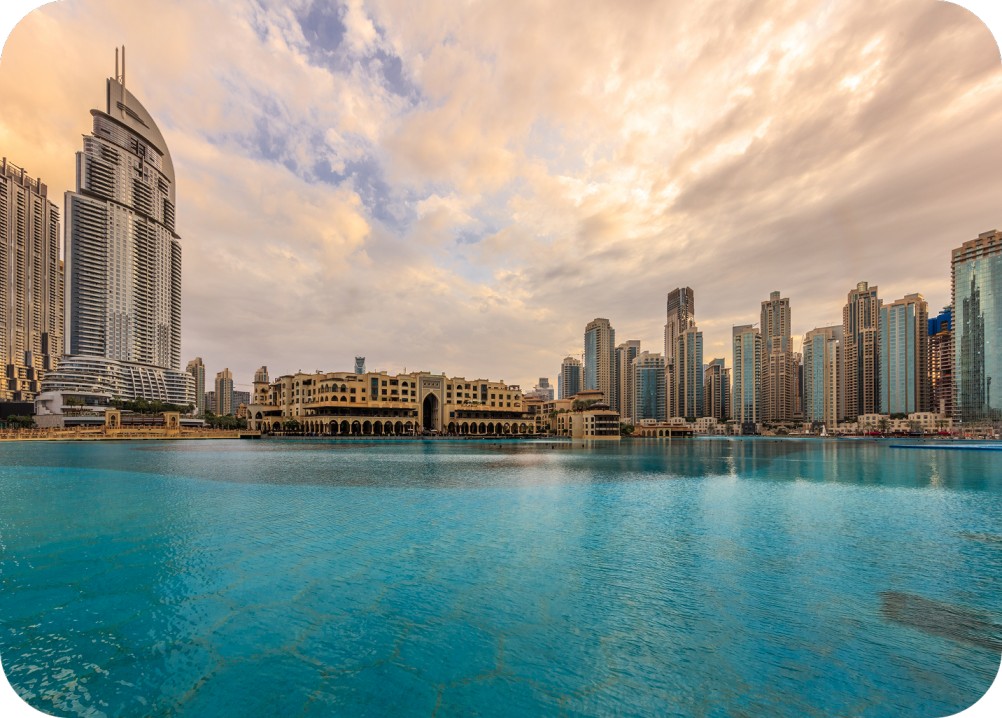
Downtown concentrates Burj Khalifa, Dubai Mall, and the fountain within a walkable area, attracting a mix of corporate and leisure demand alongside experience-led travellers.

A Downtown three-bed with a Burj Khalifa view has produced around AED 323,000 annually within the portfolio, with view quality affecting performance more sharply here than in most areas. Average daily rates are strong and corporate demand supplements tourism, though premium pricing requires premium execution against a deep field of quality stock.

The area suits investors targeting premium returns in an iconic location and willing to invest in the positioning that supports them.

Business Bay: Corporate Consistency

Business Bay combines canal frontage, metro connectivity, and a corporate neighbourhood character, drawing business travellers, conference attendees, and relocating professionals.

Demand is stable year-round and weighted towards weekdays, with less seasonal volatility than the tourist areas and genuine potential for repeat corporate bookings. Peak-season upside is lower in exchange, and the setup needs to suit business guests rather than holidaymakers.

Business Bay suits investors prioritising predictability over maximum return.

Understanding Demand Drivers

Each area runs on a different engine. Palm Jumeirah is powered by exclusivity, villa stock, and resort lifestyle. Dubai Marina runs on lifestyle, walkability, and views. JBR runs on beach access and family stays. Downtown runs on landmarks and prestige. Business Bay runs on corporate proximity and transport.

Aligning the property to the driver matters more than optimising the property in isolation, because a unit that does not serve the area's core demand competes at a disadvantage regardless of its condition.

Who Palm Properties Suit

Palm Jumeirah rewards a specific owner profile rather than a general one.

It suits owners with the capital to furnish and maintain to a luxury standard, since the segment's guests compare a villa against resort alternatives rather than against other rentals. It suits owners who intend to use professional management rather than self-manage, because the service expectations are difficult to meet remotely or part-time.

It also suits owners taking a longer view on returns, since the higher cost base means the area rewards sustained occupancy and rate discipline rather than a quick result. Owners looking for lower operational involvement or a more predictable cost base will generally find Marina or Business Bay a better fit.

Operational Intensity Comparison

Intensity runs highest on Palm Jumeirah, where luxury standards meet villa complexity, in JBR, where turnover volume is the constraint, and in Downtown, where premium expectations leave little tolerance for slippage. Dubai Marina sits in the middle with balanced demands, while Business Bay is lightest, with professional guests and predictable booking patterns.

Matching operational capability to the area's demands is as important as matching the property, since an area that outruns the management behind it will underperform its potential.

Risk Factors Across Areas

Some risks apply everywhere: DET (Dubai Department of Economy and Tourism, formerly DTCM) permit requirements, building-level restrictions on short-term letting, and ordinary fluctuation in market demand.

Others are area-specific. Palm carries high investment exposure and a demanding execution standard. Marina carries competition saturation. JBR carries turnover intensity and noise management. Downtown carries premium expectations and dependence on view quality. Business Bay carries correlation with corporate demand.

Professional management reduces the operational component of these risks across every area, though it does not remove the exposure that comes with the initial purchase decision.

There Is No "Best" Area

The right area follows from the investor rather than from a ranking. Risk tolerance, return expectations, preferred level of involvement, and investment timeline all shape it, alongside property characteristics including unit type, view, building amenities, and current condition.

Revenue-focused investors often prefer Downtown or JBR. Stability-focused investors often prefer Marina or Business Bay. Investors prioritising premium positioning generally look to Palm Jumeirah. Each of those is a defensible answer to a different question.

Making the Location Decision

Neighbourhood selection is the most consequential decision in a Dubai short-term rental investment, and it is the hardest to reverse afterwards.

Before committing, it is worth understanding the area's demand drivers, assessing the operational requirement honestly, confirming building-specific rules on short-term letting, modelling realistic returns for the specific location rather than the city average, and checking the result against personal investment objectives.

Get Location Guidance

Area selection depends on both market dynamics and the owner's own priorities, which is why a general ranking rarely settles it.

First Class Property Management provides a revenue projection covering location options, realistic income potential, and strategic fit for a specific investment approach, drawn from portfolio performance rather than market averages.

FAQ

Which area of Dubai gives the best short-term rental returns? No single area leads on every measure. Downtown and JBR tend to produce the strongest revenue, Marina and Business Bay the most consistent occupancy, and Palm Jumeirah the highest nightly rates alongside the highest cost base. The strongest area depends on the owner's tolerance for operational intensity.

Does the building matter as much as the area? It matters more than most buyers expect. Some Dubai buildings restrict or prohibit short-term letting entirely, and building quality, amenities, and management standards all affect both rate and review scores. Confirming building policy before purchase is essential, since a restriction removes the investment case whatever the area.

Is Palm Jumeirah worth the higher costs? For owners positioned for the luxury segment it can be, since nightly rates run well above the rest of the market. The furnishing standard, maintenance scope, and service expectations are all higher too, so the area rewards owners using professional management and taking a longer view on returns.

Which area suits a first-time short-term rental investor? Dubai Marina and Business Bay are usually the more forgiving entry points. Both carry diverse, year-round demand with moderate operational intensity, which leaves more room for the learning curve than the luxury or high-turnover segments allow.

Experience stress-free property management with our top-tier service.

Estimate your revenue