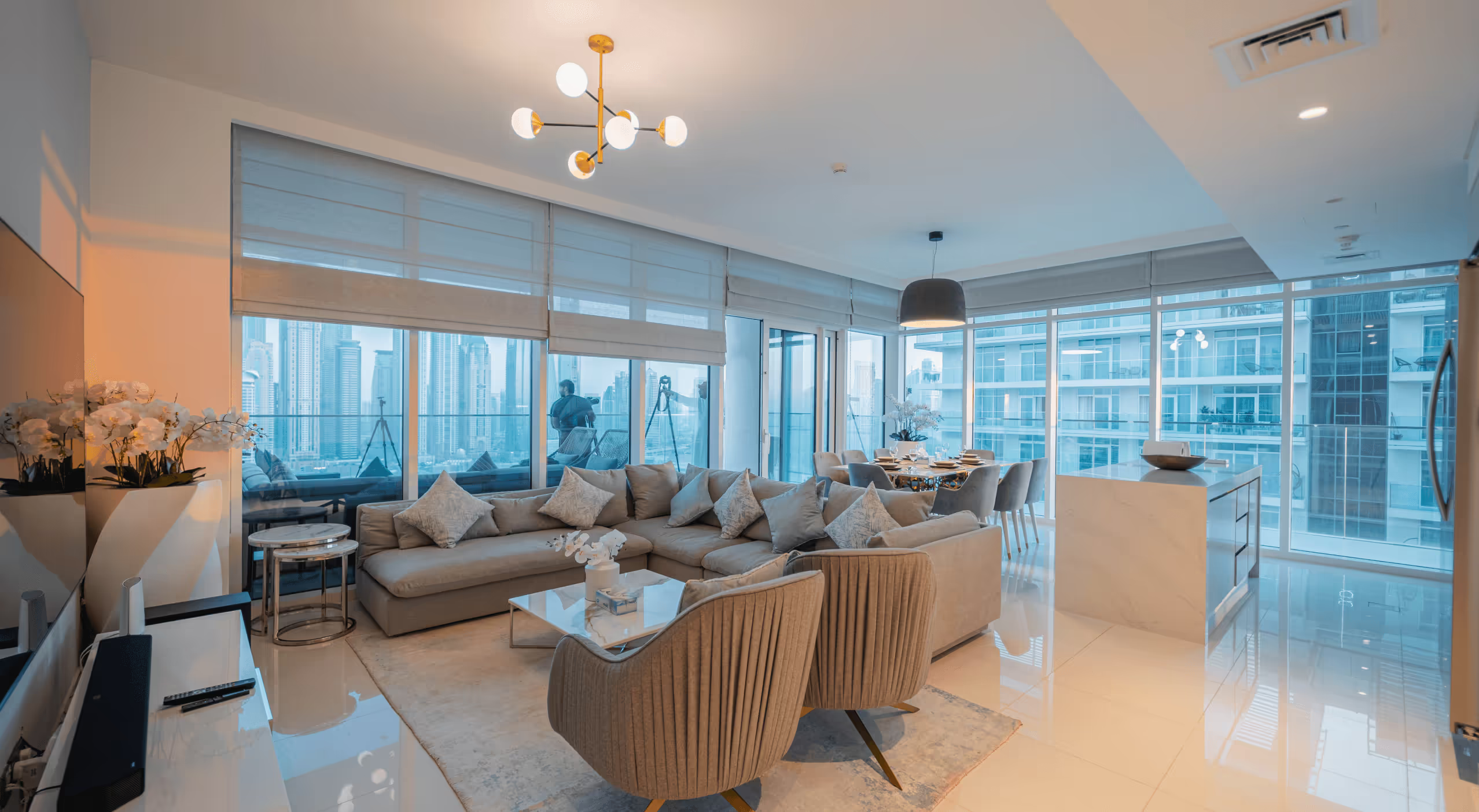
Dubai's hotel offering is among the strongest anywhere, from the Burj Al Arab and Atlantis The Royal to One\&Only, Armani, and Four Seasons, so the question is not one of quality. The question is why high-net-worth travellers increasingly choose villas anyway, and the answer comes down to five things.
Privacy. A hotel lobby, pool, and restaurant are shared spaces, while a villa belongs entirely to its guests: no other guests, no public areas, and no noise from the room next door. For families, public figures, and business leaders who value discretion, this is often the deciding factor.
Space. A luxury hotel suite offers 100 to 200 square metres, whereas a Palm Jumeirah villa spreads 500 to 1,000+ square metres across multiple levels, with outdoor areas, a private pool, and a garden besides. For groups and families, the comparison is not close.
Flexibility. A villa runs on the guest's schedule rather than the hotel's, so there are no breakfast sittings, no restaurant reservations, and no checkout pressure.
Value for groups. A six-bedroom villa split across a family group often costs less per person than equivalent hotel suites while delivering far more space, and the economics improve as the group grows, which is why large group villas have become a category of their own in Dubai.
Personalisation. Private chefs, personal trainers, spa therapists, and yacht charters can all be arranged to come to the property, so the service happens in private space and on the guest's terms.
None of this is a criticism of Dubai's hotels, which set a very high standard. It reflects what luxury increasingly means to people who can afford to choose: privacy, space, and control, and villas deliver all three.
The Service Infrastructure That Makes It Work
A luxury villa without professional management is simply an expensive house, and what separates Dubai from other villa destinations is the depth of service infrastructure behind the properties.
The city's five-star hotel industry has trained thousands of people in guest service, housekeeping, concierge work, and operations. As villa management has grown, many of those professionals have moved into the STR sector and brought hotel-grade standards with them.
First Class reflects this dynamic, with a team of 150+ employees (as of June 2026), many from five-star hotel backgrounds, delivering white-glove turnovers, multilingual guest support, and 24/7 availability. It is also why luxury owners tend to choose fully managed STR services rather than handling operations themselves.
That infrastructure is thin in most competing destinations: Bali offers warm hospitality but limited professional STR management, service standards in the south of France vary widely, and the Caribbean offers isolation without systematic consistency.
Year-Round Demand, Not Seasonal Dependence
Most luxury villa destinations depend on a single season. The south of France peaks in summer, the Caribbean in winter, and Alpine chalets work within a three-month window, which limits annual yield and leaves long vacancy periods.
Dubai's demand is spread far more evenly. Peak season runs November to March on the back of European and global winter travel, while summer brings GCC regional visitors, Ramadan and Eid bookings, and a growing staycation market. Event-driven demand around F1, New Year, Eid, GITEX, and Art Dubai adds pricing spikes throughout the year.
The result shows in occupancy. First Class maintains a 94% average occupancy across its portfolio of 600+ properties (as of June 2026), a level seasonal destinations cannot reach, though results for any individual villa vary with location, season, and pricing.
For owners, this means revenue is not concentrated in a three-month window, though capturing that spread depends on active revenue management, with peak-season premiums layered over a strong baseline.


%20(1).avif)